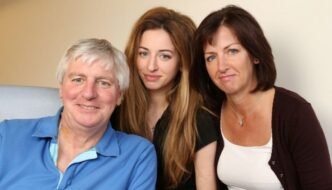
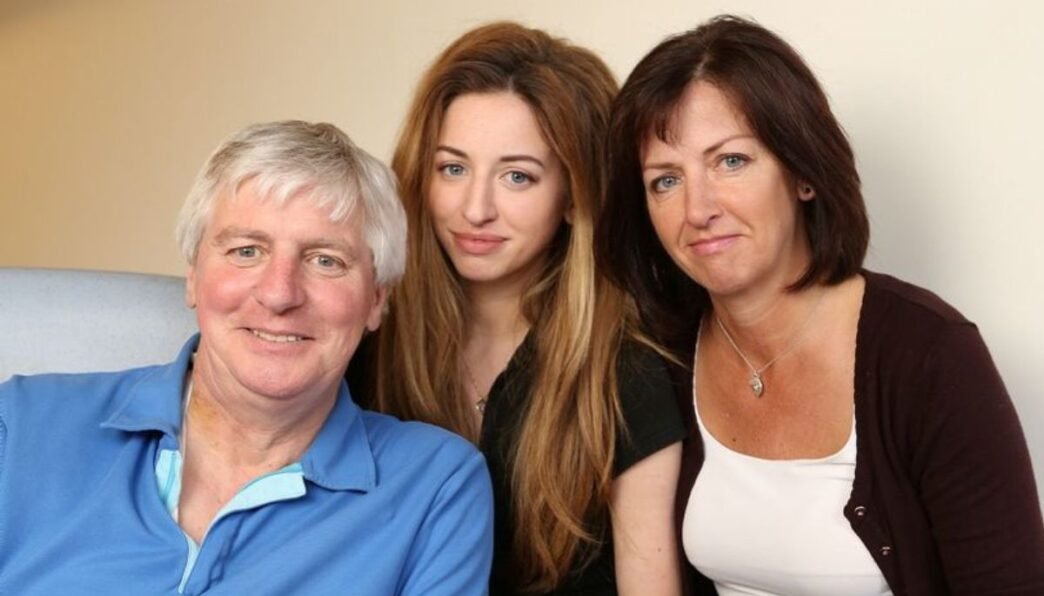
Michael Lyster’s wife, Anne Lyster, stood as his anchor throughout his four-decade career and personal battles.
Michael Lyster built one of the most distinguished careers in Irish sports broadcasting, spending nearly four decades at the forefront of RTÉ’s coverage of Gaelic games and the Olympic Games.
Born on 11 April 1954 in Dungarvan, County Waterford, he grew up in Barnaderg, County Galway, after his Garda father received a transfer there.
He received his education at St Jarlath’s College in Tuam before beginning his working life in a local sugar factory.
Lyster launched his journalism career as a junior reporter at The Tuam Herald, where he wrote a music column for seven years. He joined RTÉ in 1980 as a sports broadcaster on Radio 2 and quickly rose through the ranks.
He covered the 1980 Moscow Olympics on radio, made his television Olympic debut in 1984 co-hosting Daybreak LA, and that same year took over as presenter of The Sunday Game — a role he held with extraordinary distinction for 34 years.
In 1988, he earned a Jacob’s Award for his work on the programme.
Beyond Gaelic games, he covered horse racing, motorsport, rugby, athletics, and soccer throughout his career.
After ill health prompted his retirement in 2018, Lyster stepped down following the All-Ireland Senior Football Championship Final.
He died on 22 March 2026 at the age of 71, leaving behind a legacy as the defining face of GAA broadcasting in Ireland.
Michael Lyster’s Wife, Anne, Was His Quiet Support System
Behind Michael Lyster’s four-decade career stood Anne Lyster — a woman he described as his anchor, his calm in every storm, and ultimately, the person who kept him alive.
Anne has always stayed away from the public eye, living quietly alongside Michael rather than beside his fame.
Yet her story, pieced together from his interviews and tributes over the years, reveals a remarkable woman of quiet strength and steady character.
Anne and Michael’s story began in 1983, and it did not start smoothly.
At the time, Anne worked as a press officer for ACOT, the organisation that later became Teagasc, Ireland’s agriculture and food development authority.
Michael was coaching and managing the RTÉ ladies’ soccer team and brought in five players from outside the organisation — Anne among them.
From the start, their personalities clashed. Anne spoke her mind directly and questioned his decisions on the training ground, which Michael admitted he found difficult when trying to assert himself as a coach.
He later reflected on those early days with characteristic honesty:
“She was inclined to question some of the routines and decisions, which could be hard when I was trying to lay down the law as a coach. We had a clash of personalities at the beginning, but when we got over that, I knew I liked her.”
That initial friction gave way to something far deeper. The more Michael got to know Anne, the more he admired exactly the qualities that had initially frustrated him — her directness, her confidence, and her refusal to soften the truth.
He described her as “glamorous, strong, sensible and pragmatic” and praised how she would “tell you what she thinks without sparing you, but at the same time, she’s very open.”
He saw that as a very good quality, and clearly, he was right.
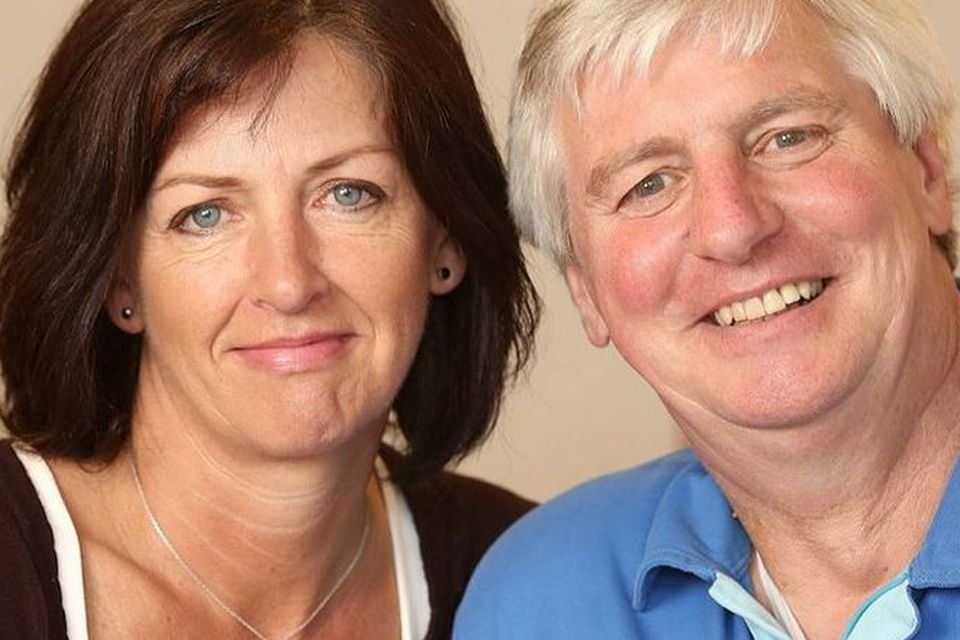
Michael and Anne married in 1985 and built a life together in Cabinteely, South Dublin, where they remained for decades.
Their marriage lasted over 40 years, right up until Michael’s death in March 2026.
Together, they raised four children — two sons and two daughters.
Their son Mark pursued a career in IT, while their younger son Jack studied sports psychology and worked weekends at RTÉ.
Their daughter Rebecca worked in childcare and became a mother herself in 2023, welcoming a daughter named Molly, who lived in Tullamore.
Their daughter, Ellen, trained as a nurse. The family valued privacy deeply, following Anne’s example of staying well clear of the public spotlight.
Michael frequently spoke of the warmth and love that surrounded him at home, particularly during periods of illness, describing himself as being “showered with love” by Anne and their children.
If Anne Lyster ever became known to the wider public, it was for an act of extraordinary courage and composure on the night of 5 June 2015 — the night she saved her husband’s life.
Michael had spent the day playing golf in Portumna, County Galway, with his close friend and journalist Vincent Hogan.
Hogan drove him home to Cabinteely, dropping him off around 11:30 pm. Shortly after arriving home, Michael realised he had left his phone in Hogan’s car.
He called Hogan from the house phone and asked him to come back.
Within minutes of Hogan returning, Michael opened the front door — and collapsed in the hallway. He suffered a massive cardiac arrest.
Hogan found him unconscious and immediately called upstairs for Anne. He also phoned for an ambulance.
Anne came downstairs to find her husband on the floor, unresponsive.
She did not panic. She had first-aid training, and she put it to use immediately, beginning CPR and continuing compressions as the ambulance operator guided her over the phone.
She maintained that focus and calm until paramedics arrived and took over.
Michael later spoke openly about how close to death he had come.
“I was actually gone,” he said. He credited the rapid response of everyone involved — but above all, he credited Anne.
“She just went into action,” he recalled. “Anne has had first aid training, as have I, so that was the key to it. I don’t know if I would have stayed as calm as Anne did. She’s very good under pressure. I owe my life to Anne.”
Doctors fitted Michael with a pacemaker and defibrillator following the episode.
He made a full recovery and returned to The Sunday Game for three further seasons.
In interview after interview during his recovery, he returned to the same theme: Anne’s calmness had made the difference between life and death.